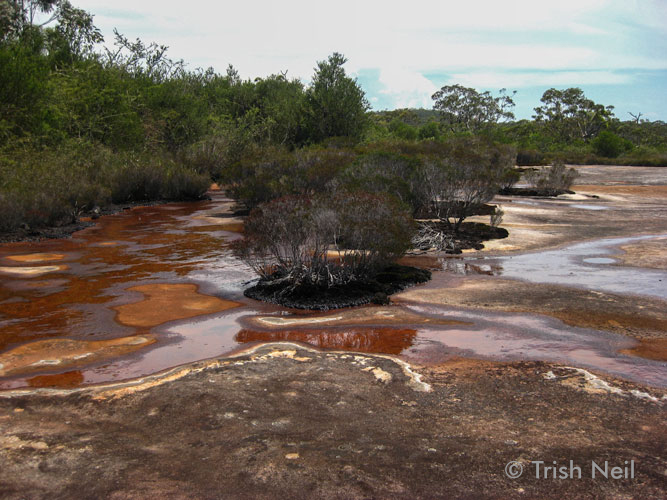
I was wandering through the bush near where I live, looking at some aboriginal rock carvings, and came across these wonderful rock platforms. I lay down on the rock to take the first picture; the tea trees growing here are so stunted they are natural bonsais. The whole scene conveys that a lovely air of unreality that you get on your own in the bush. Well, not quite unreality, more being totally removed from everyday reality, of being in deep time rather than shallow, rushed time.
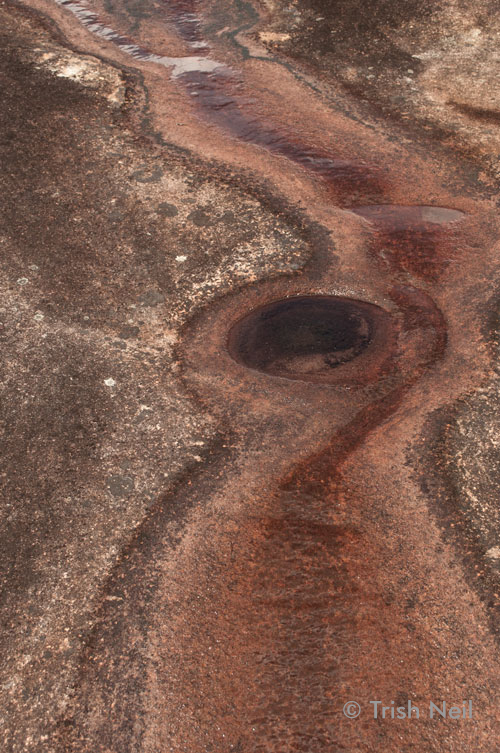
The recent rain brings the rocks alive with colour; these little runnels of water make the most beautiful abstract shapes.
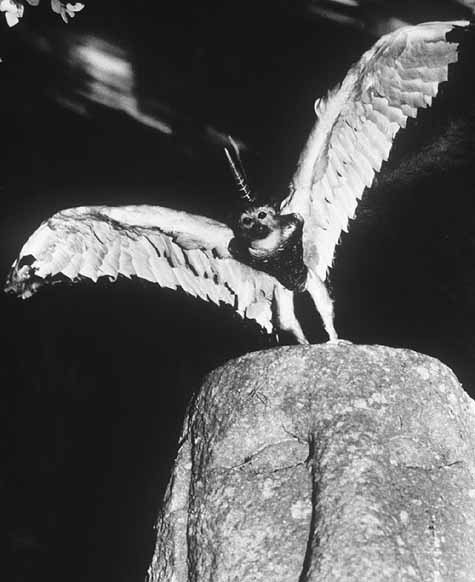
I am fascinated with the work of Joan Fontcuberta. He constantly questions our acceptance of the photograph because of its appearance of reality – yes I know everyone is aware of fakes, of photoshopped models, etc etc, but we still tend to give credence to photographic evidence despite that. That is to me the interesting thing about digital post production work, that you can, as it were, paint with reality (or the appearance of it). Like this lovely creature from his Fauna series …..
http://www.eyecurious.com/interview-joan-fontcuberta-landscapes-without-memory/
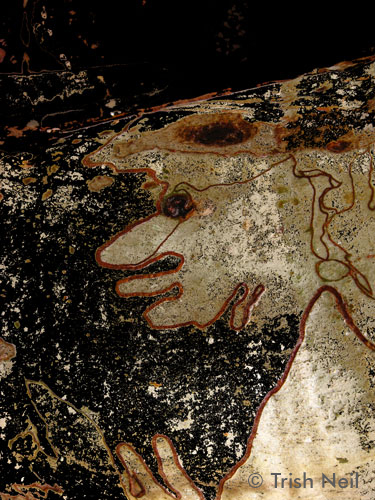
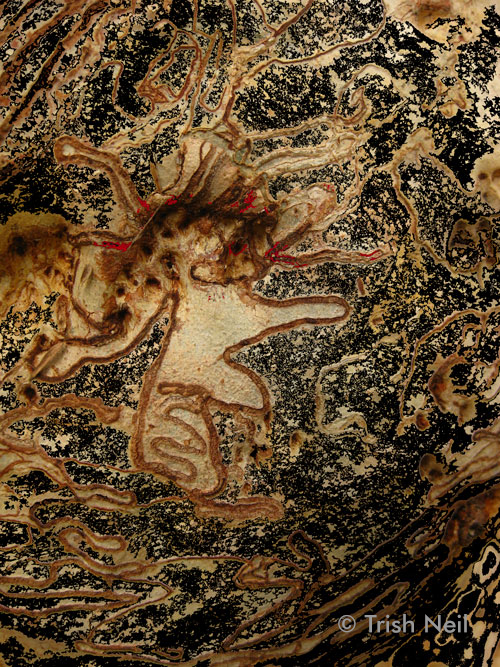
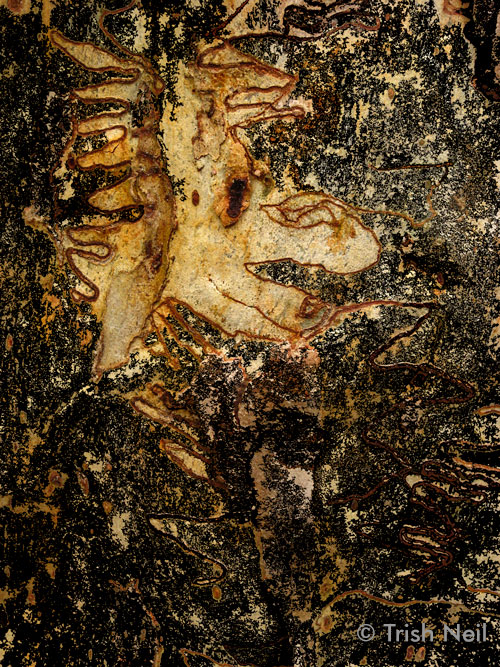
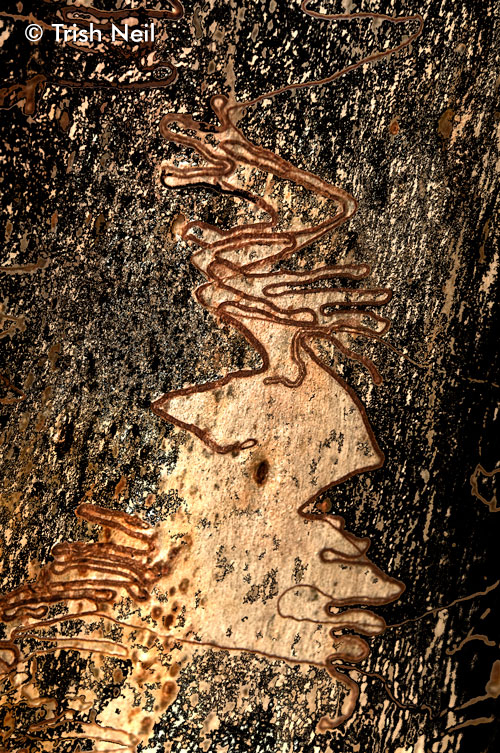
Scribbly bark scribbles are the ultimate Rorschach Test of the bush! (For those unfortunates without ready access to the Australian bush, there are tiny insects which burrow under the bark of the Scribbly Gum eucalypts and leave these wonderful patterns. Each year the tree sheds most of its outer bark and reveals a new set of scribbles. Infinite variety!) With a little help from photoshop to emphasise what I see and produce something which looks rather like an etching, here is the first of a selection of Scribbles.
“The sandstone is the bone and root of the coast. On top of the cliff, the soil is thin and the scrub sparse. there are banksia bushes, with their sawtooth-edged leaves and dried seed cones like multiple, jabbering mouths. Against this austere grey-green, the occasional red or blue scribble of a flower looks startling. But further back to the west, the sandstone ledges slip down into the harbor, separating it into scores of inlets. In 1788 these sheltered coves were densely wooded. The largest trees were eucalypts: red gums, angophoras, scribbly gums and a dozen others. Until the late eighteenth century no European had ever seen a eucalypt, and very strange they must have looked, with their strings of hanging, half-shed bark, their smooth wrinkling joints (like armpits, elbows or crotches), their fluent gesticulations and haze of perennial foliage.” Robert Hughes, in ‘The Fatal Shore: The Epic of Australia’s Founding.
Or, to put it another way ………. “Someone should put underpants on those trees…” John Turier, sculptor. ( www.kingstreetgallery.com.au/stockroom/john–turier)
Novalis (Friedrich von Hardenberg 1772-1801) provided this definition of Romanticism: “By giving the commonplace a high meaning, the ordinary a mysterious aspect, the known the dignity of the unknown, the finite an aura of infinity, I romanticise it.”